Begin with the hand
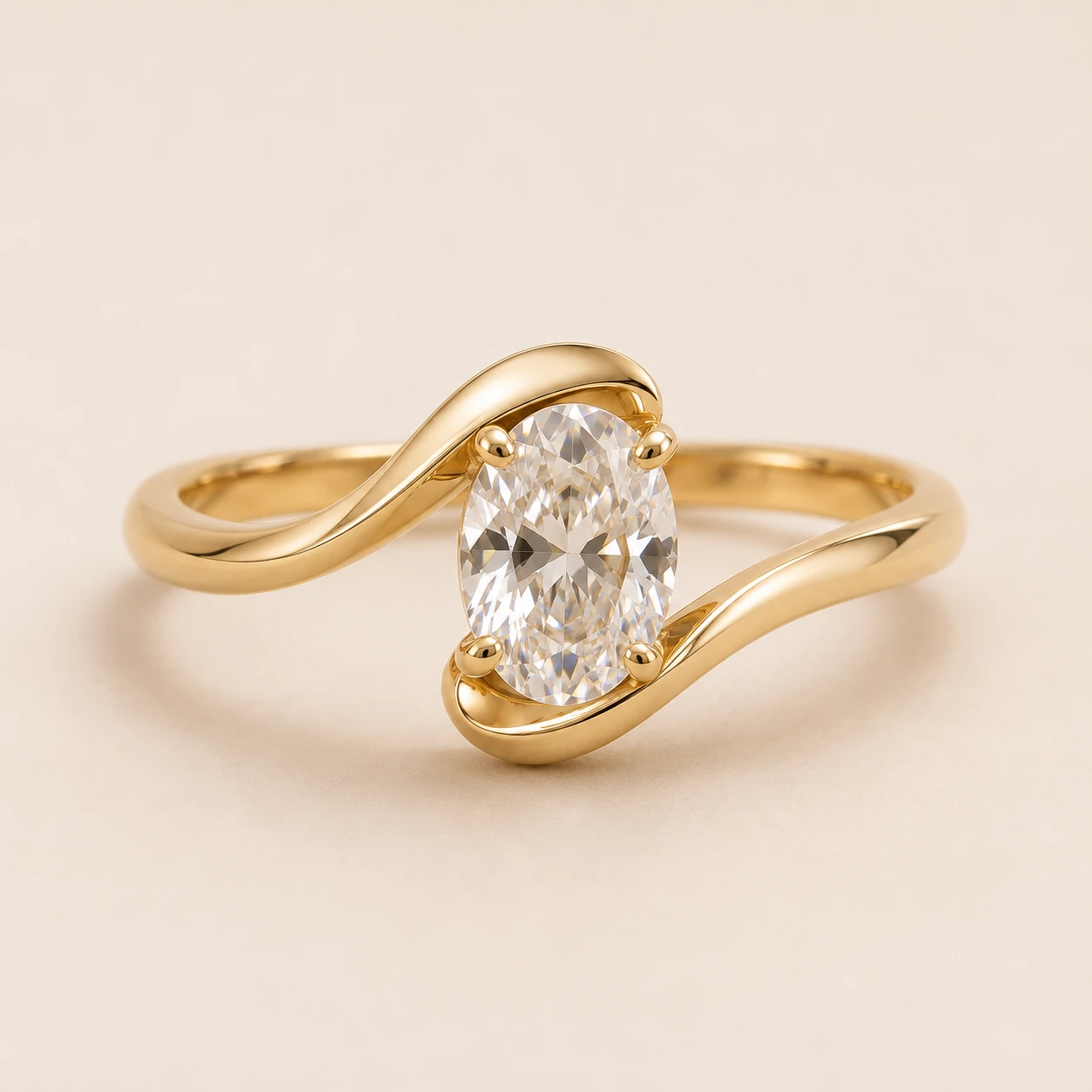
A photograph shows a ring at its most composed. A useful comparison begins with the hand that will wear it: the way you write, the sleeves you reach for and the other pieces you already know.
Notice the height
Look at the profile as well as the face of the setting. A low oval and a taller solitaire can feel very different against a glove or a knitted sleeve. The relevant question is the relationship with your own routine.
Leave space for a fitting
A size chart is a point of reference rather than a promise of fit. If you are considering a real purchase, a professional fitting can clarify the difference between a comfortable size and one that simply passes over a knuckle.
Try one conversation at a time
Compare the shape first, then the material and the setting. Separating those questions can make the choice easier to understand, especially when several finishes and stones are available.
Keep the useful detail
Write down the size and the reason a particular shape interested you. A short note can be more useful when returning to a selection than another photograph with no context.
From the Avelis notebook
A useful jewellery story connects a visual idea with the practical details of wearing and keeping a piece. Return to the individual product page for its selected finish, stone and size, and use the care and sizing guides as companions to that description. All examples belong to this fictional collection; no real purchase, certification or appraisal is provided.

Mira Vale
Avelis collection editor. Looking at the relationship between a useful detail and a personal point of view.
The Avelis story ↗