The first drawing
A clear line can hold a surprising number of decisions. The width of a shoulder, the space beneath a setting and the way two edges meet all affect the character of the finished shape.
Working around the stone
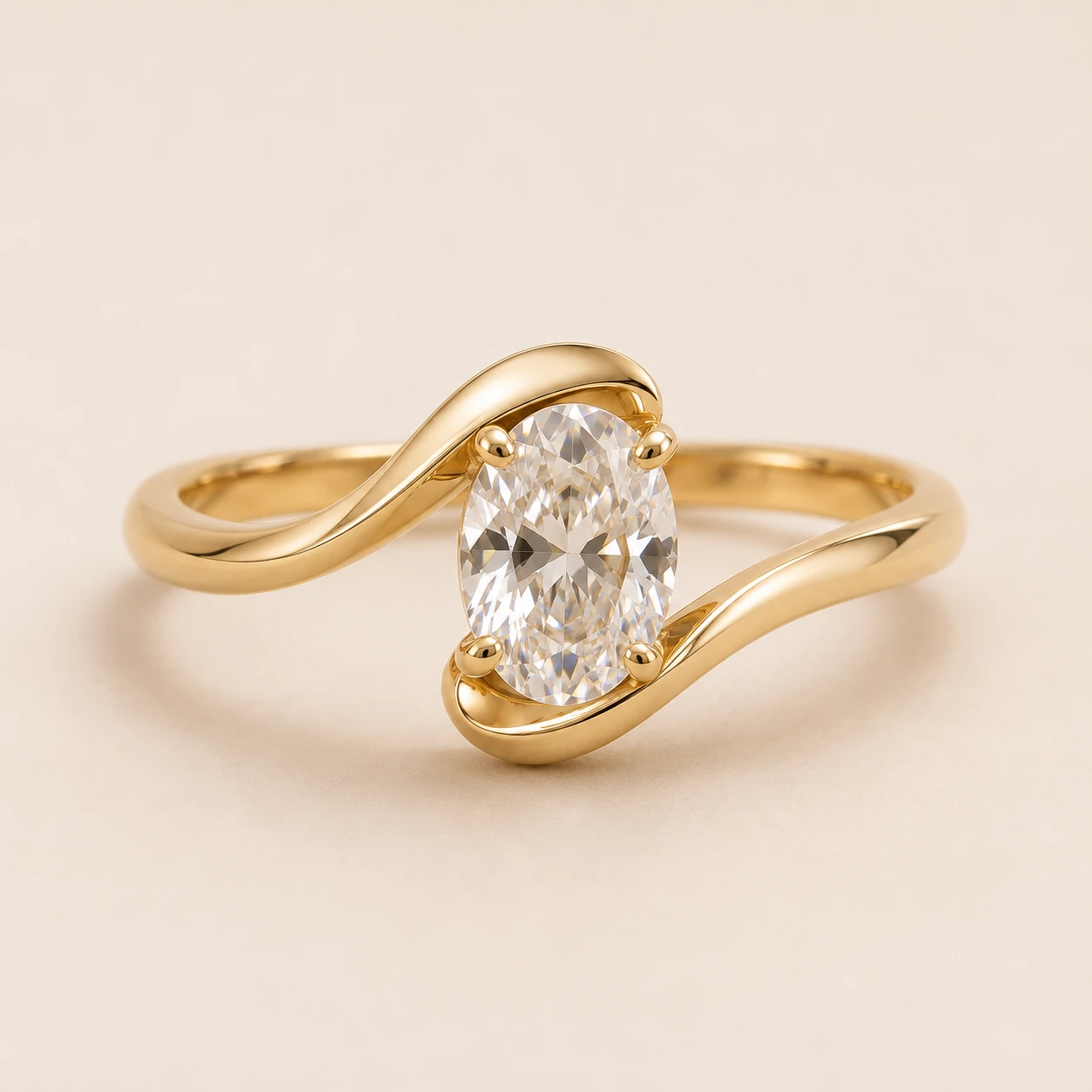
A setting is considered in relation to its stone rather than as a separate decoration. The claws, seat and surrounding space need to work together, with clear information about the intended material.
The useful pause
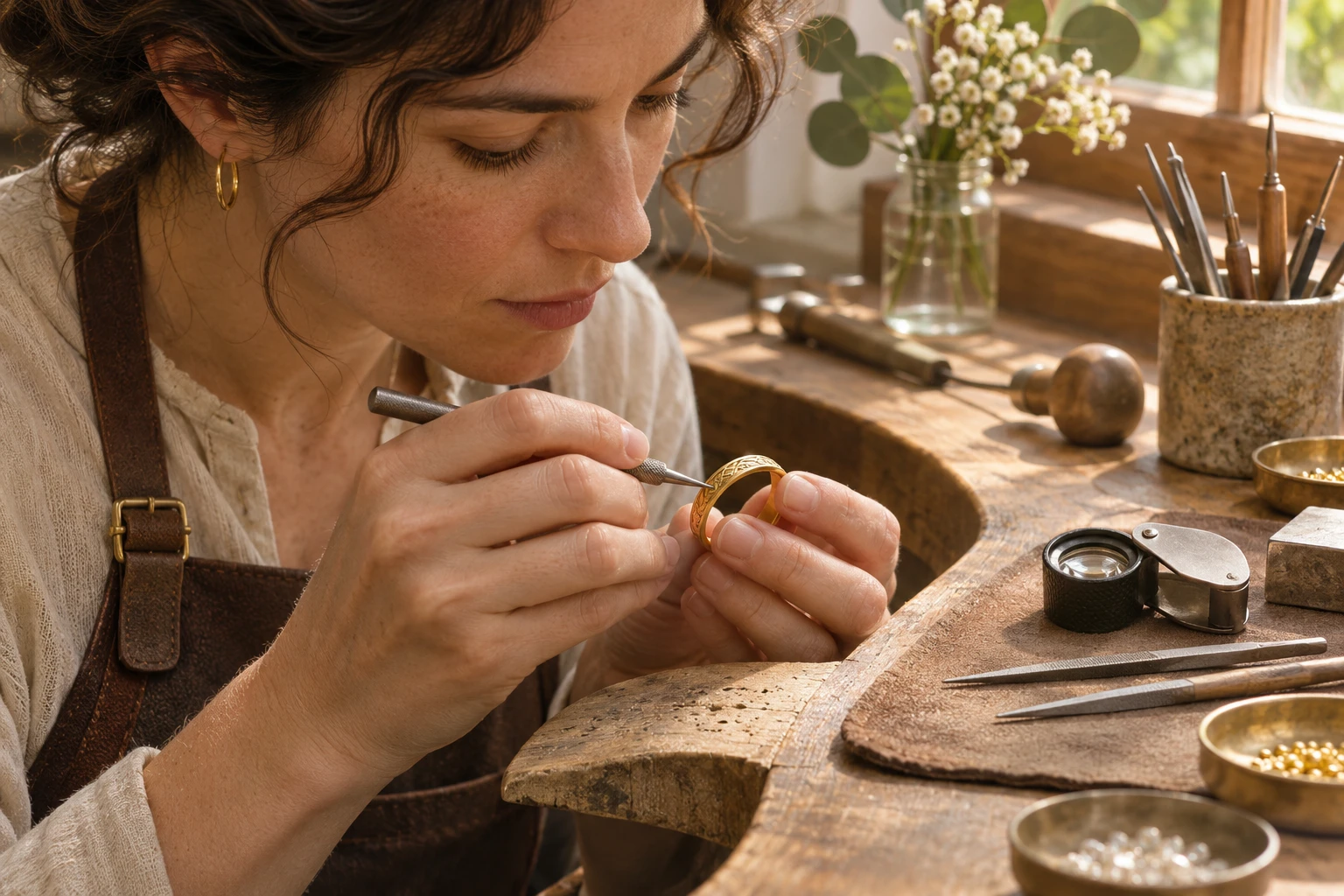
Looking away from a drawing and returning to it can reveal a proportion that was not obvious at first. An atelier story is as much about the questions asked as the tools on the bench.
Reading the finish
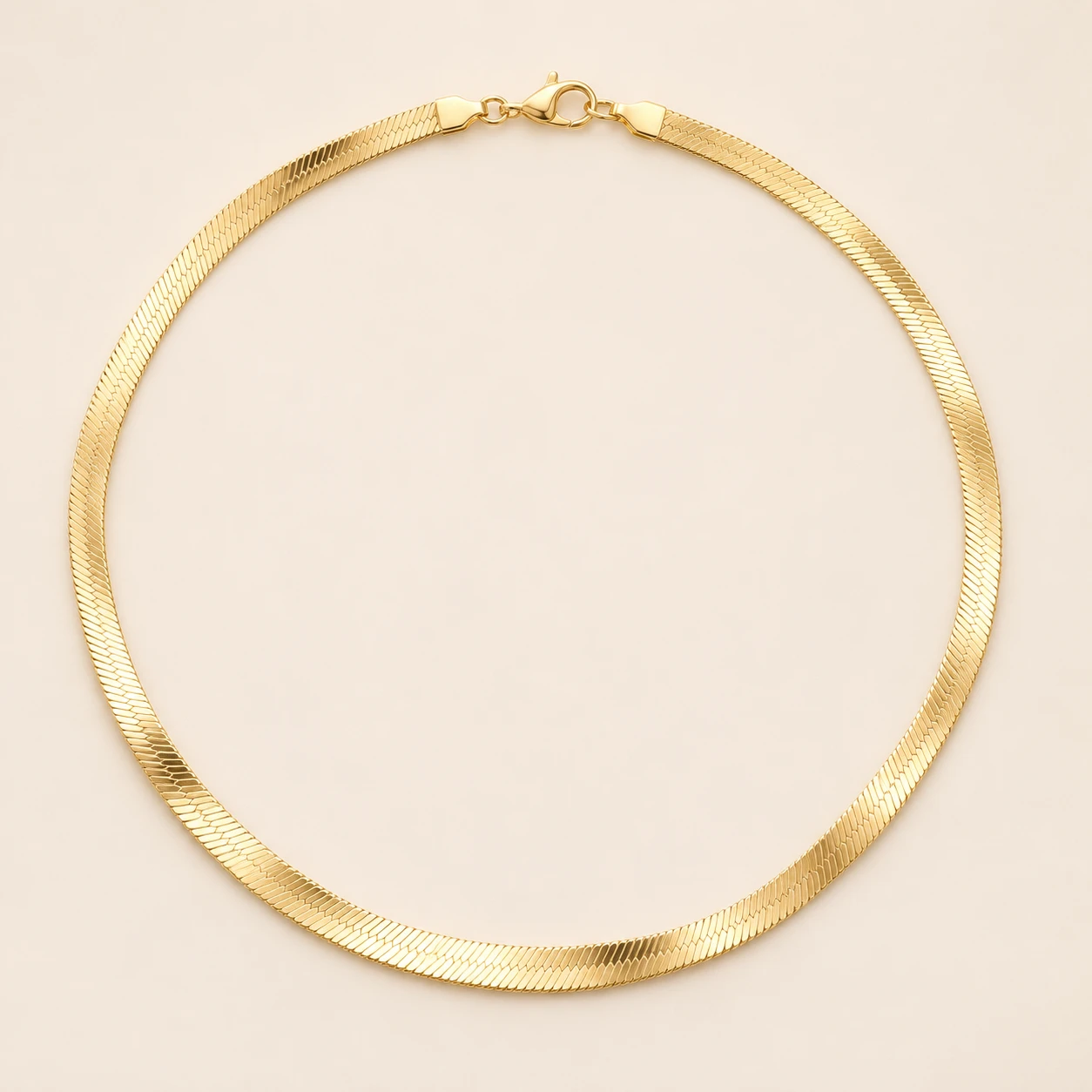
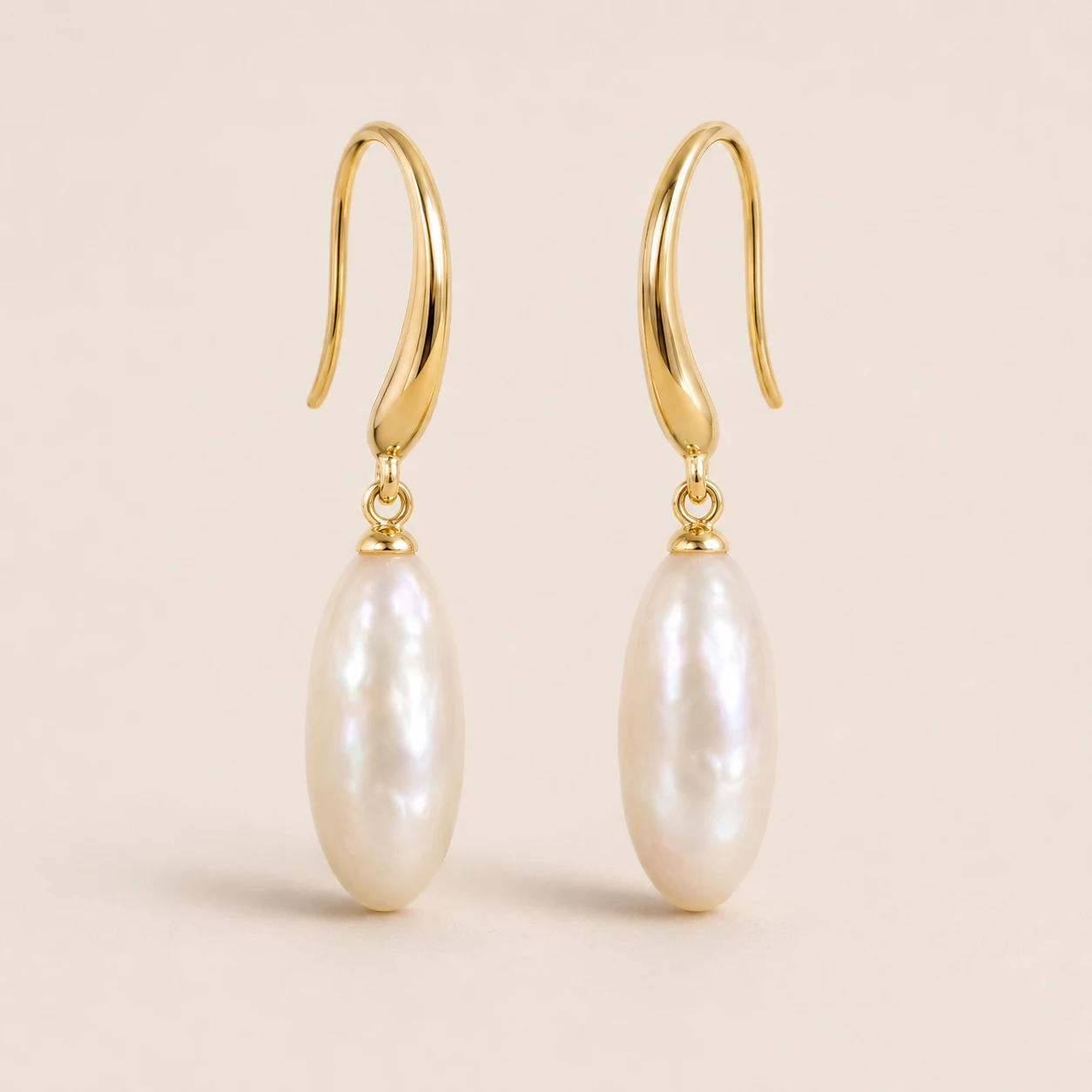
A polished surface catches the light differently from an edge or an interior curve. The finish should make the form easier to understand without disguising the parts a wearer needs to know.
Keep the story honest
The bench photographs here are original synthetic illustrations of an independent atelier. They explain a design point of view rather than document a real workshop, qualification or production claim.
From the Avelis notebook
A useful jewellery story connects a visual idea with the practical details of wearing and keeping a piece. Return to the individual product page for its selected finish, stone and size, and use the care and sizing guides as companions to that description. All examples belong to this fictional collection; no real purchase, certification or appraisal is provided.

Mira Vale
Avelis collection editor. Looking at the relationship between a useful detail and a personal point of view.
The Avelis story ↗